🌿How Ashwagandha Is Cultivated, Harvested, and Processed?
Ashwagandha *(Withania somnifera) is one of the most trusted herbs in Ayurveda, known for its natural wellness benefits. As its popularity continues to grow worldwide, the way it is cultivated, harvested, and processed plays a key role in maintaining its quality and effectiveness.
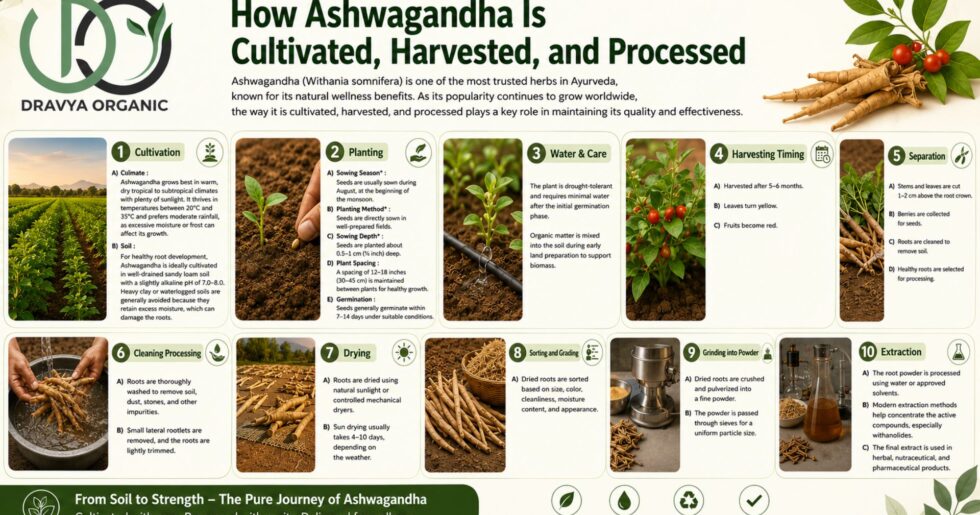
1)Cultivation
A) Climate : Ashwagandha grows best in warm, dry tropical to subtropical climates with plenty of sunlight. It thrives in temperatures between 20°C and 35°C and prefers moderate rainfall, as excessive moisture or frost can affect its growth.
B)Soil:For healthy root development, Ashwagandha is ideally cultivated in well-drained sandy loam soil with a slightly alkaline pH of 7.0–8.0. Heavy clay or waterlogged soils are generally avoided because they retain excess moisture, which can damage the roots.
2)Planting
A)Sowing Season* : Seeds are usually sown during August , at the beginning of the monsoon.
B)Planting Method * : Seeds are directly sown in well-prepared fields.
C)Sowing Depth * : Seeds are planted about 0.5–1 cm (¼ inch) deep.
D)Plant Spacing : A spacing of 12–18 inches (30–45 cm) is maintained between plants for healthy growth.
E)Germination : Seeds generally germinate within 7–14 days under suitable conditions.
3)Water & Care
The plant is drought-tolerant and requires minimal water after the initial germination phase. Organic matter is mixed into the soil during early land preparation to support biomass
4)Harvesting Timing
A) Harvested after *5–6 months. B)* Leaves turn yellow. C) Fruits become red
5)Separation
A) Stems and leaves are cut 1–2 cm above the root crown. B) Berries are collected for seeds. C) Roots are cleaned to remove soil. D) Healthy roots are selected for processing.
6) Cleaning Processing
A) Roots are thoroughly washed to remove soil, dust, stones, and other impurities. B) Small lateral rootlets are removed , and the roots are lightly trimmed.
7)Drying
A) Roots are dried using natural sunlight or controlled mechanical dryers . B) Sun drying usually takes 4–10 days , depending on the weather.
8)Sorting and Grading
A)Dried roots are sorted based on size, color, cleanliness, moisture content, and appearance.
9)Grinding into Powder
A) Dried roots are crushed and pulverized into a fine powder. B)The powder is passed through sieves for a uniform particle size.
10)Extraction
A) The root powder is processed using water or approved solvents. B) Modern extraction methods help concentrate the active compounds, especially withanolides. C) The final extract is used in herbal, nutraceutical, and pharmaceutical products.